Modern SaaS Architecture: Building Scalable, Resilient Cloud-Native Applications
CGM Tech Team · 1/10/2025 · 15 min read

Building a successful SaaS platform requires more than just great code — it demands a thoughtful architecture that can scale gracefully, maintain performance under pressure, and keep data secure across thousands of tenants. At CGM, we’ve architected SaaS platforms serving millions of users, and this guide distills our most important lessons learned.
Architecture Complexity by Scale
The Evolution of SaaS Architecture
SaaS architecture has evolved dramatically over the past decade. Early SaaS applications were essentially monolithic web apps deployed to shared servers. Today’s SaaS platforms are sophisticated distributed systems leveraging containers, serverless functions, and edge computing to deliver exceptional performance and reliability.
The key insight driving this evolution is that different aspects of a SaaS application have different scaling requirements. Authentication might need to handle burst traffic, while data processing might need sustained throughput. Modern architectures separate these concerns, allowing each component to scale independently.
Core Scalability Principles
Stateless Service Design
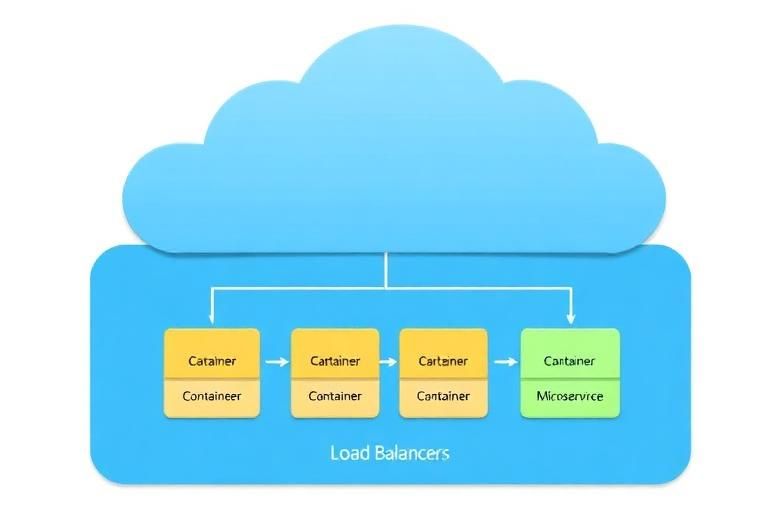
The foundation of scalable SaaS architecture is stateless service design. When services don’t maintain session state, they can be horizontally scaled simply by adding more instances behind a load balancer.
Stateless Architecture Benefits vs. Requirements
Benefits:
- Linear horizontal scaling capability
- Graceful handling of instance failures
- Simple load balancer configuration
- Efficient auto-scaling based on demand
Implementation Requirements:
- External session storage (Redis, Memcached)
- Token-based authentication (JWT, OAuth2)
- Centralized configuration management
- CDN for static asset delivery
Microservices Architecture
Breaking a SaaS application into microservices allows teams to develop, deploy, and scale services independently. Each service owns its data and communicates through well-defined APIs.
Service Decomposition Strategy
Effective decomposition follows domain-driven design principles. Each service should represent a bounded context with clear ownership and responsibilities.
- User Management Service — authentication, authorization, profile management
- Billing Service — subscriptions, payments, invoicing, usage tracking
- Notification Service — email, push, SMS, in-app messaging
- Analytics Service — usage tracking, reporting, dashboard data
- Core Business Logic — domain-specific functionality unique to your product
Database Architecture & Multi-Tenancy
Database design is perhaps the most critical architectural decision in SaaS development. The multi-tenancy model you choose impacts everything from performance to data isolation to operational complexity.
Multi-Tenancy Models
Shared Database, Shared Schema: Lowest cost, highest density. Uses row-level security and tenant ID columns. Best for small to mid-sized tenants.
Shared Database, Separate Schema: Better isolation with moderate cost. Each tenant gets their own schema within a shared database instance.
Separate Database per Tenant: Maximum isolation and customization. Higher cost but ideal for enterprise clients with strict compliance requirements.
Performance Optimization
Read Replicas: Distribute read queries across multiple database instances to reduce load on the primary database.
Horizontal Sharding: Distribute data across multiple database instances based on tenant ID or geographic region.
Connection Pooling: Use connection pooling (PgBouncer, ProxySQL) to efficiently manage database connections across thousands of tenants.
Technology Stack Decisions
Frontend Architecture
Modern SaaS frontends need to deliver fast, responsive experiences while supporting complex features like real-time collaboration, offline capability, and white-labeling.
Frontend Technology Comparison:
- Next.js — Full-stack SaaS — SSR, API routes, ISR — Excellent
- React + Vite — SPA dashboards — Fast dev, flexible — Very Good
- Vue/Nuxt — Content-heavy SaaS — Simple, performant — Very Good
Backend Architecture
The backend architecture must handle complex business logic, data processing, and integrations while maintaining high availability and performance.
API Gateway Pattern
An API gateway serves as the single entry point for all client requests, handling cross-cutting concerns like authentication, rate limiting, and routing.
- Authentication and authorization verification
- Rate limiting per tenant and per user
- Request routing to appropriate microservices
- API versioning and backward compatibility
- Request logging and monitoring
- Response caching for frequently accessed data
Event-Driven Architecture
Event-driven patterns decouple services and enable asynchronous processing, which is essential for handling spiky workloads and maintaining responsiveness.
Example: User Signup Flow:
-
- User submits registration form
-
- Auth Service creates account and publishes ‘UserCreated’ event
-
- Notification Service sends welcome email
-
- Billing Service creates free trial subscription
-
- Analytics Service records signup event and source attribution
Performance Optimization
Multi-Layer Caching Strategy
Effective caching is the single biggest performance lever in SaaS applications. A well-designed caching strategy can reduce database load by 90% and cut response times dramatically.
Caching Strategy by Layer
Client-Side Caching:
- Browser cache with proper Cache-Control headers
- Service Worker for offline-first experiences
- LocalStorage for user preferences and state
- State management (Redux/Zustand) for in-memory cache
Server-Side Caching:
- Redis for session data, API responses, and computed results
- CDN (CloudFront, Cloudflare) for static assets and API caching
- Database query cache for frequent read patterns
- Application-level cache for expensive computations
Auto-Scaling Strategies
Auto-scaling allows your infrastructure to automatically adjust capacity based on demand. This ensures consistent performance while optimizing costs.
Case Study: E-Commerce SaaS Platform
A CGM client’s e-commerce SaaS platform needed to handle Black Friday traffic spikes — 15x normal load — without performance degradation.
- Peak load: 15x normal traffic handled seamlessly
- Response time: maintained <200ms at 95th percentile
- Cost optimization: 40% reduction in off-peak infrastructure costs
- Global distribution: sub-100ms latency worldwide via edge computing
Security Architecture
Zero-Trust Security Model
In a multi-tenant SaaS environment, security isn’t optional — it’s existential. A single data breach can destroy customer trust and end your business. We advocate for a zero-trust security model where every request is authenticated and authorized, regardless of origin.
Security Layers
Network Layer:
- TLS 1.3 encryption for all communications
- Web Application Firewall (WAF) rules
- DDoS protection and rate limiting
- VPN for internal service communication
Application Layer:
- JWT-based authentication with short-lived tokens
- Role-based access control (RBAC) with fine-grained permissions
- Input validation and sanitization
- OWASP Top 10 vulnerability protection
Data Layer:
- Encryption at rest (AES-256) and in transit
- Field-level encryption for sensitive data
- Complete audit trail for all data access
- GDPR and SOC 2 compliance controls
Observability & Monitoring
You can’t improve what you can’t measure. Comprehensive observability is essential for maintaining SaaS platform health, quickly diagnosing issues, and making data-driven architecture decisions.
Key Metrics to Monitor:
- API response time (p50, p95, p99)
- Request throughput per service
- Error rate by endpoint and tenant
- Resource utilization (CPU, memory, disk I/O)
- Business metrics (signups, conversions, churn)
Recommended Monitoring Stack:
- Prometheus — metrics collection and alerting
- Grafana — dashboards and visualization
- ELK Stack — centralized logging and search
- Jaeger/Zipkin — distributed tracing
- Datadog/New Relic — APM and infrastructure monitoring
Deployment & DevOps
CI/CD Pipeline
A robust CI/CD pipeline is essential for maintaining development velocity as your SaaS platform grows. Automated testing, deployment, and rollback capabilities enable teams to ship with confidence.
Deployment Pipeline Stages:
- Code: Lint, unit tests, code review, security scanning
- Build: Docker build, integration tests, performance tests
- Deploy: Canary deployment, smoke tests, gradual rollout
- Monitor: Health checks, error tracking, performance baseline
Performance Benchmarks
Based on our experience building SaaS platforms at CGM, here are the performance benchmarks you should target:
Future Trends in SaaS Architecture
The SaaS architecture landscape continues to evolve rapidly. Here are the trends we’re most excited about at CGM:
- Edge computing for ultra-low latency experiences worldwide
- Serverless-first architectures that eliminate infrastructure management overhead
- AI-powered operations (AIOps) for self-healing infrastructure and predictive scaling
- WebAssembly (Wasm) for near-native performance in the browser
- Quantum-safe cryptography for future-proof security
Build Your SaaS Platform with CGM
Whether you’re building a new SaaS product from scratch or modernizing an existing platform, CGM has the expertise to help you succeed.
Architecture Review: Our senior architects will review your current or planned architecture and provide actionable recommendations for scalability, security, and performance.
Migration Strategy: If you’re modernizing a legacy application, we’ll help you develop a phased migration strategy that minimizes risk and maximizes business value.